
How to Stop Your Cat Scratching Furniture
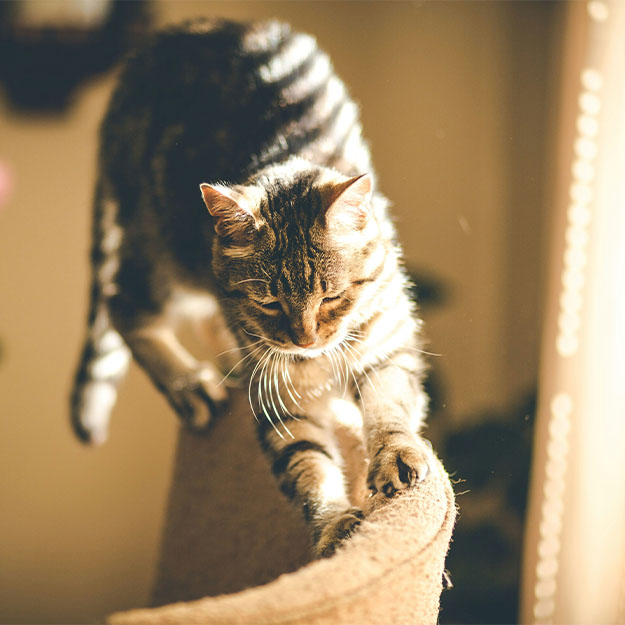

You bought the scratching post. You put it where it would look nice. Your cat walked past it, stretched up against the sofa, and got right back to work. If that sounds familiar, you are not the only person sharing a home with a cat who has strong opinions about the furniture.
Figuring out how to stop your cat scratching furniture usually starts with a closer look at what they are choosing instead. The sofa may offer a better stretch, a more satisfying surface, or simply a spot your cat likes spending time in. A few thoughtful changes can make the scratching post more appealing without turning every trip through the living room into a disagreement.
Understand What Your Cat Gets Out of Scratching
Scratching serves several purposes for cats. It helps them stretch and shed the outer layers of their claws, and it leaves both visible marks and scent from glands in their paws. Your cat is communicating in a way that makes sense to them, even if the message happens to be written on your favorite chair.
That is why the goal is to give your cat somewhere suitable to scratch rather than trying to remove the behavior altogether. Watch how they use the furniture before buying another post. Do they reach as high as they can up the arm of the sofa, or do they crouch down and pull at the rug? Those details are useful clues. You are looking for an alternative that offers the same kind of experience.

Choose a Scratcher Your Cat Actually Wants
A cat who enjoys stretching upward needs a sturdy vertical post tall enough to let them extend their body. A cat who prefers the carpet may be happier with a long, flat scratcher. Cardboard and sisal are common options, but texture preferences vary. One ignored post does not mean your cat has rejected the entire idea of scratching posts.
Stability matters, too. Give the post a gentle push before expecting your cat to use it. If it tips or slides across the floor, it may be less inviting than the very solid couch beside it. Check that a flat scratcher stays in place when your cat pulls against it. A scratcher can look perfectly suitable to us and still fail the practical test for the cat using it.
There is no need to replace every option at once. Start with what you have observed and try a different shape or surface where it is needed. Once your cat shows a preference, you have something more useful to go on than the picture on the packaging.
Put It Where the Scratching Happens
The empty corner behind the guest-room door might be a convenient place for a scratching post, but it is not much help if your cat wants to scratch in the living room. Place the alternative beside the furniture they already use, close enough that it is an easy choice. A scratcher near a favorite sleeping spot can also give your cat somewhere to stretch after a nap.
This may mean living with a post in a slightly awkward location for a while. Once your cat is using it reliably, you can try moving it a little at a time toward a more convenient spot. Moving it across the room overnight asks your cat to find a new habit all over again. If the sofa becomes the favorite again, bring the post back and make the next move smaller.
You can protect the targeted area with a securely fitted furniture cover while your cat learns, but keep an appealing scratching surface nearby. Covering the sofa without offering another option leaves the original need unanswered. It helps to think of the cover as temporary protection, not the whole plan.

Make the New Habit Worth Repeating
When your cat uses the scratcher, reward them promptly with something they enjoy, such as a small treat or a little play. Keep the interaction relaxed. You do not need to pick up their paws and demonstrate; forcing their feet against the post can make it something they would rather avoid. Our Cat Training 101 article looks at the same reward-based approach for other everyday habits.
Try to notice successful moments instead of paying attention only when the furniture is involved. If your cat heads toward a familiar scratching spot, gently encourage them toward the nearby alternative with a toy. Shouting or using a spray bottle can frighten your cat and does not teach them which surface you want them to choose.
Keep the approach consistent with everyone who cares for your cat. If you are leaving instructions for a pet sitter, point out the scratchers your cat uses and explain how you reward them. It is a small detail that is easy to leave out of the care notes, especially when meals and medications take priority.
Look Beyond the Sofa if Something Has Changed
A sudden increase in scratching can sometimes be connected to stress, including changes in the home. Think about whether the behavior began around a move or the arrival of a new pet. If your cat seems unsettled, or the scratching continues despite suitable alternatives, speak with your veterinarian rather than assuming your cat is being difficult. They can help you work out what needs attention.
For many households, the starting point is much simpler: a stable scratcher in the right place and a little patience while the cat gets used to it. Give yourself time to see what works before declaring the new post another expensive ornament. Your cat does not have to share your taste in furniture to find a scratching arrangement you can both live with.